
.png)

.png)
.png)



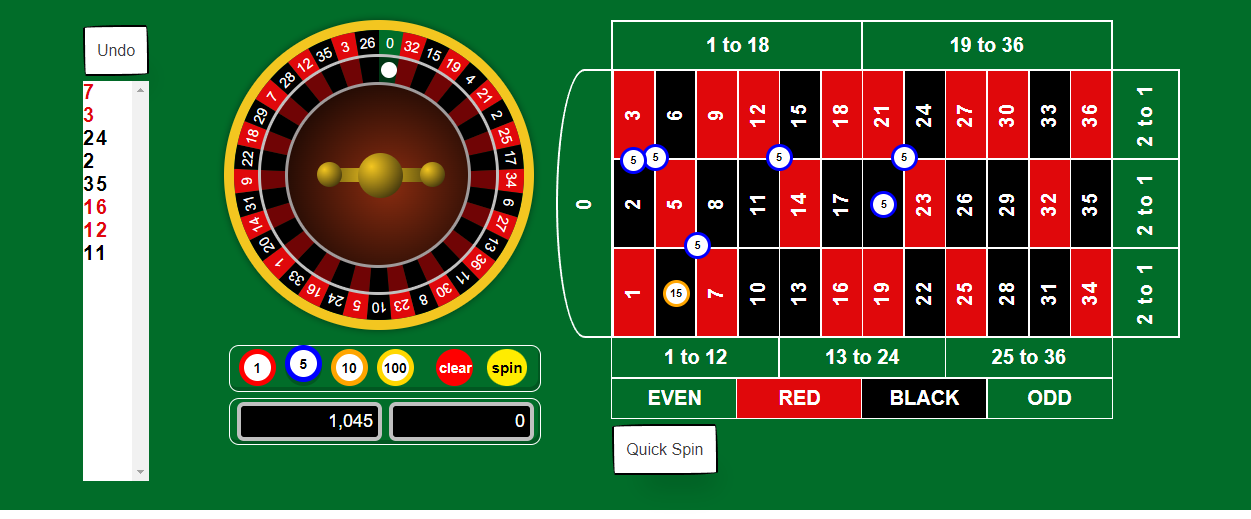

Chop Betting Simulator — 1-1 Chop vs Double/Single
https://gamble-galaxy.com/freetrackers/doublesinglechop.html
How this simulator bets against the chop
A chop is a streak of alternating outcomes — for a 1-1 chop that could be Red, Black, Red, Black, Red, Black on any evenly-split attribute (Red/Black, Odd/Even, or 1–18/19–36). Once the chop reaches your trigger length, the simulator bets on the same result repeating (e.g. Black again) to break the chop. If it loses (the chop continues), the stake steps up the progression and bets on the new last result to try to break it — and so on until it wins, at which point the progression resets to the start.
R → B → R → B → R → B — next bet: Black (to end the chop)
The Double/Single chop works the same way but on 1–9 (single-digit) versus 10–36 (double-digit) numbers. Because doubles vastly outnumber singles (27 numbers vs 9), the most common way this chop breaks is with two double-digit numbers in a row — and most of those doubles sit in the 2nd and 3rd dozens (13–36). So whenever the last number in an active chop is a double, the simulator bets both the 2nd and 3rd dozen together, hoping for a repeat double to land there and end the chop. If the last number was a single, no bet is placed that round since dozens 13–36 can't resolve a single-repeat.
A double landing on 10, 11 or 12 does technically break the chop but isn't covered by the dozen bet, so it still counts as a loss for the wager — a known trade-off of only covering the 2nd/3rd dozens.
Any spin on 0 resets the chop and counts as a loss on an active bet, same as any outside bet.
Both simulations run on the exact same spin sequence, so the comparison chart above is an apples-to-apples test of the two strategies.
This is a simulation for entertainment and pattern-study purposes only. Roulette outcomes are independent and random — no staking progression changes the underlying odds. Gamble responsibly.


