
.png)

.png)
.png)



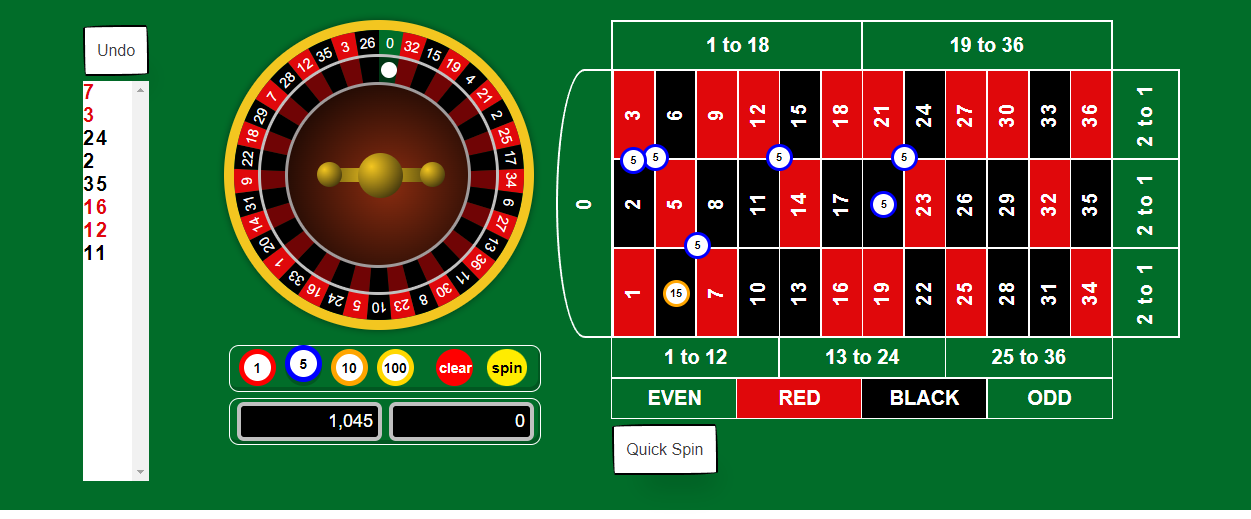

Is it best to follow a chop on roulette or bet against it ??
Roulette players often talk about “chop patterns” — sequences where results seem to alternate between two outcomes, such as red/black, high/low, or in your case, a 1/1 vs 2/1 structure. It creates a tempting question:
If a table looks like it’s chopping, should you follow it… or bet against it?
In this guide, we’ll break down what a chop really means in roulette, why players try to exploit it, and how your own simulation can help test whether it has any real edge or if it’s just pattern illusion.
You can also test these ideas live here:
👉 https://gamble-galaxy.com/freetrackers/bouncysim.html
What does “chop” mean in roulette?
A “chop” simply refers to an alternating pattern in results.
For example:
Red / Black / Red / Black
1:1 payout / 2:1 payout / 1:1 payout / 2:1 payout
Low / High / Low / High
When players see this happen a few times in a row, it creates the feeling that the wheel is “settling into a rhythm”.
In reality, every spin is independent, meaning:
Past results do not influence future spins
Any streak (or chop) is random clustering, not a rule
This is one of the most common misunderstandings in roulette psychology — the idea that patterns signal what comes next.
Following the chop: the common approach
Some players try to follow the chop, meaning they bet the opposite of the last result:
If 1:1 hits → they switch to 2:1
If 2:1 hits → they switch back to 1:1
The logic is simple:
“If it’s alternating, I’ll stay with the alternation.”
When a chop is active, this can feel effective because you’ll naturally hit several wins in a short sequence.
However, the key issue is that:
The chop does not “stay active” reliably
It breaks randomly without warning
Any short-term success is just variance
So while it can look intelligent in the moment, it doesn’t change the long-term math of the game.
Betting against the chop: the contrarian approach
Other players do the opposite — they assume the pattern will break.
So if they see:
1:1 → 2:1 → 1:1 → 2:1
They expect:
“It can’t continue forever, so I’ll bet it breaks”
This is basically a form of reversal betting, similar in mindset to anti-streak strategies.
The problem here is the same:
There is no “pressure” for a break
The wheel doesn’t balance itself
Long streaks and chops both occur naturally over time
So betting against the chop is just as uncertain as following it.
The key truth about chop systems
Whether you follow or fade a chop, the underlying reality doesn’t change:
Each spin is independent
Roulette has a fixed house edge
Patterns are visual, not predictive
What does change is volatility:
Following a chop can feel smoother during alternating runs
Betting against it can feel better during streaky runs
But neither approach gives a mathematical edge over time.
Where your 1/1 vs 2/1 sim becomes useful
This is where your simulator is actually valuable.
By using:
👉 https://gamble-galaxy.com/freetrackers/bouncysim.html
You can:
Test long runs of chop-following
Compare against chop-fading strategies
See how often patterns actually persist
Measure drawdowns during streak breaks
Instead of guessing, you can visually see:
How random “chop clusters” form
How quickly they break
Why both sides eventually even out
Most importantly, it shows something many players miss:
A strategy can look consistent in short bursts but still fail over large samples.
So… should you follow or bet against the chop?
The honest answer is:
Neither approach gives a real edge.
But each has a different feel:
Following the chop → smoother short-term flow
Betting against it → higher variance swings
Random play → identical long-term expectation
If your goal is entertainment, both can be fun to test.
If your goal is consistency, the only real control is:
stake size
session length
discipline
Not pattern prediction.
Final thoughts
Chop betting is one of those roulette ideas that feels logical because humans are wired to find structure in randomness. Sometimes the wheel does look like it’s alternating perfectly — but that’s exactly what randomness looks like at small sample sizes.
The best use of chop systems isn’t to “beat” roulette, but to explore how patterns appear and disappear in real time.
And your simulator is a great way to see that in action.
👉 Try it here: https://gamble-galaxy.com/freetrackers/bouncysim.html


